
Edward James Willson
1787-1854
Edward James Willson was an English architectural writer, architect and antiquary. He was the Mayor of Lincoln from 1851-1852.
He was educated at Lincoln Grammar School, housed in the Greyfriars, and after leaving school he joined his father’s building firm. He had no regular architectural training, but by studying Lincoln Cathedral and other ancient buildings in the city he acquired a considerable knowledge of Gothic architecture.
Willson had established himself as an architect by 1817 when he was engaged to rebuild Messingham church. This was followed by his supervision of restorations of various Lincolnshire churches including churches at Louth and South Willingham.
His first major project was St Saviour’s church Retford in 1829. In 1826 he designed the organ case in Lincoln Cathedral.
Willson was responsible for designing the Lincolnshire landmark Pelham’s Pillar on a hill between Cabourne and Grimsby for the Earl of Yarborough, with the building being completed in 1849.
He was an important architectural historian. In 1816 he published a history of the City of Lincoln entitled The History of Lincoln; containing an account of the Antiquities, Edifices, Trade, and Customs, of that Ancient City; an introductory sketch of the County; and a description of the Cathedral. This was the first standalone comprehensive history of the City of Lincoln, and was illustrated with engravings. Willson was a pioneer in publishing this work.
Before the beginning of the nineteenth century popular books on topography were unknown. Willson became friends with a fellow antiquarian, John Britton, and he contributed to Britton’s volumes Cathedral Antiquities (1814–35) and Picturesque Antiquities of English Cities (1830).
As a result of his friendship with Britton, Willson became a member of the Architects and Antiquaries Club in 1819. Amongst the members of the club was Charles Augustus Pugin. This led to Willson writing the text to Specimens of Gothic Architecture with illustrations by Pugin, which was published in two volumes in 1821 and 1822. Willson then wrote jointly with Pugin Examples of Gothic Architecture, consisting of Plans, Sections Elevations and Details which was published in two volumes in 1830 and 1836.
In 1841 Willson gave the introductory address to the newly-formed Lincolnshire Topography Society, which he appears to have been instrumental in founding. Prominent members of the society were the mathematicians George Boole and Sir Edward Bromhead. The society was short-lived but was a pre-cursor to the Lincolnshire Diocesan Architectural Society, from which the present Society for Lincolnshire History and Archaeology (SLHA) is directly descended.
In 1832 Willson was commissioned to undertake an initial survey of Lincoln Castle and in 1835 and 1845 he was responsible for the restoration of the keep, walls and towers. He was responsible for much restoration work on churches throughout the county and its neighbours, including some Roman Catholic churches and chapels.
The Willson family had lived at a house known as Willson’s Cottages on Newport in Lincoln, but in 1824 Willson was responsible for the rebuilding of 15 Minster Yard in Lincoln, a prominent house which subsequently became his own home.
He had built up over his lifetime a considerable collection of Lincolnshire antiquities and items associated with Lincolnshire history, which were acquired after his death by the Duke of Newcastle, and which are now on display at Alnwick castle.
Willson died in Lincoln on 8 September 1854. His wife was related to the Heneages, a prominent Roman Catholic family in Hainton, Lincolnshire, and Willson was buried in the graveyard at Hainton, where he had designed the Roman Catholic chapel of St Francis de Sales in 1836.
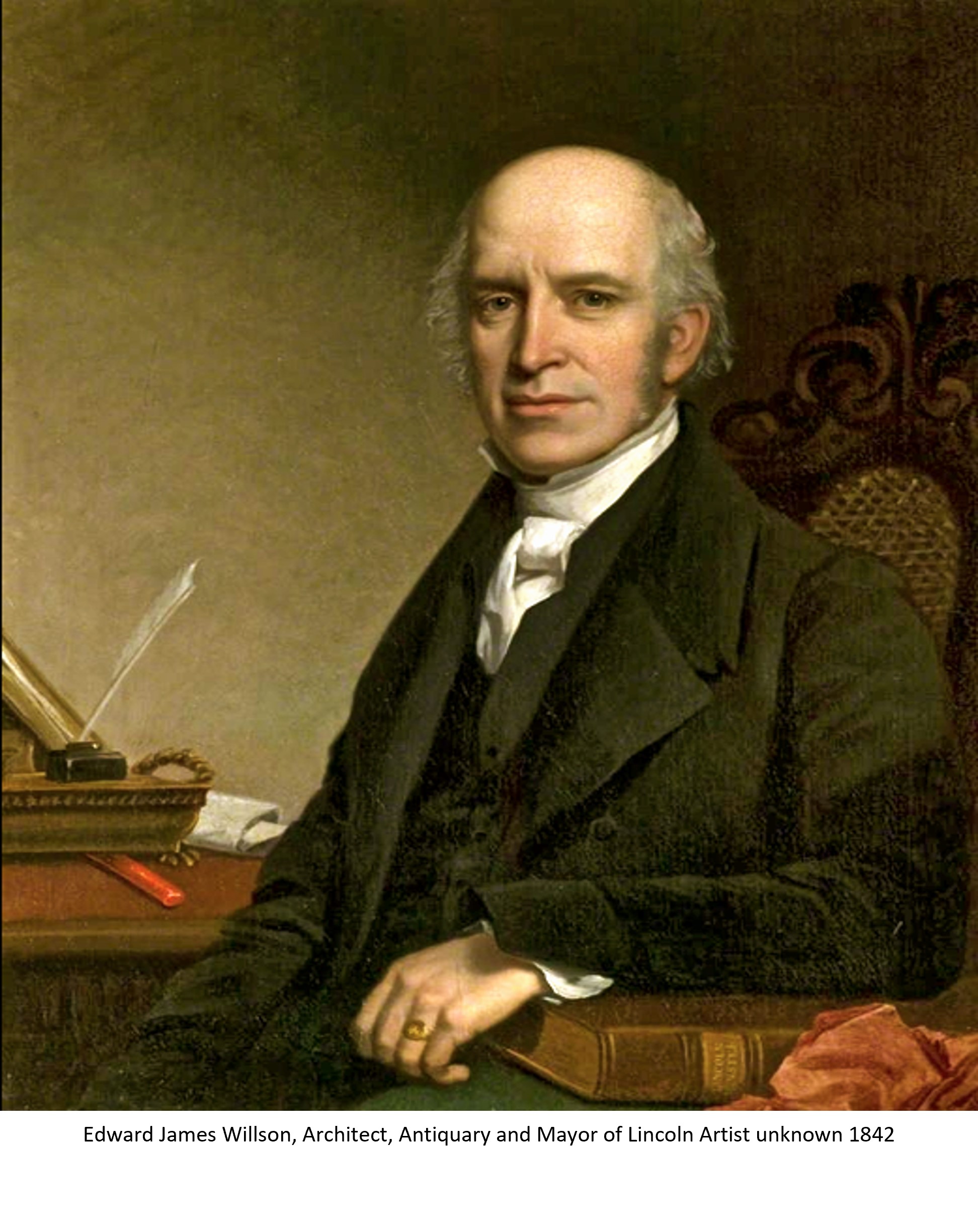
Edward James Willson, Architect, Antiquary and Mayor of Lincoln Artist unknown 1842
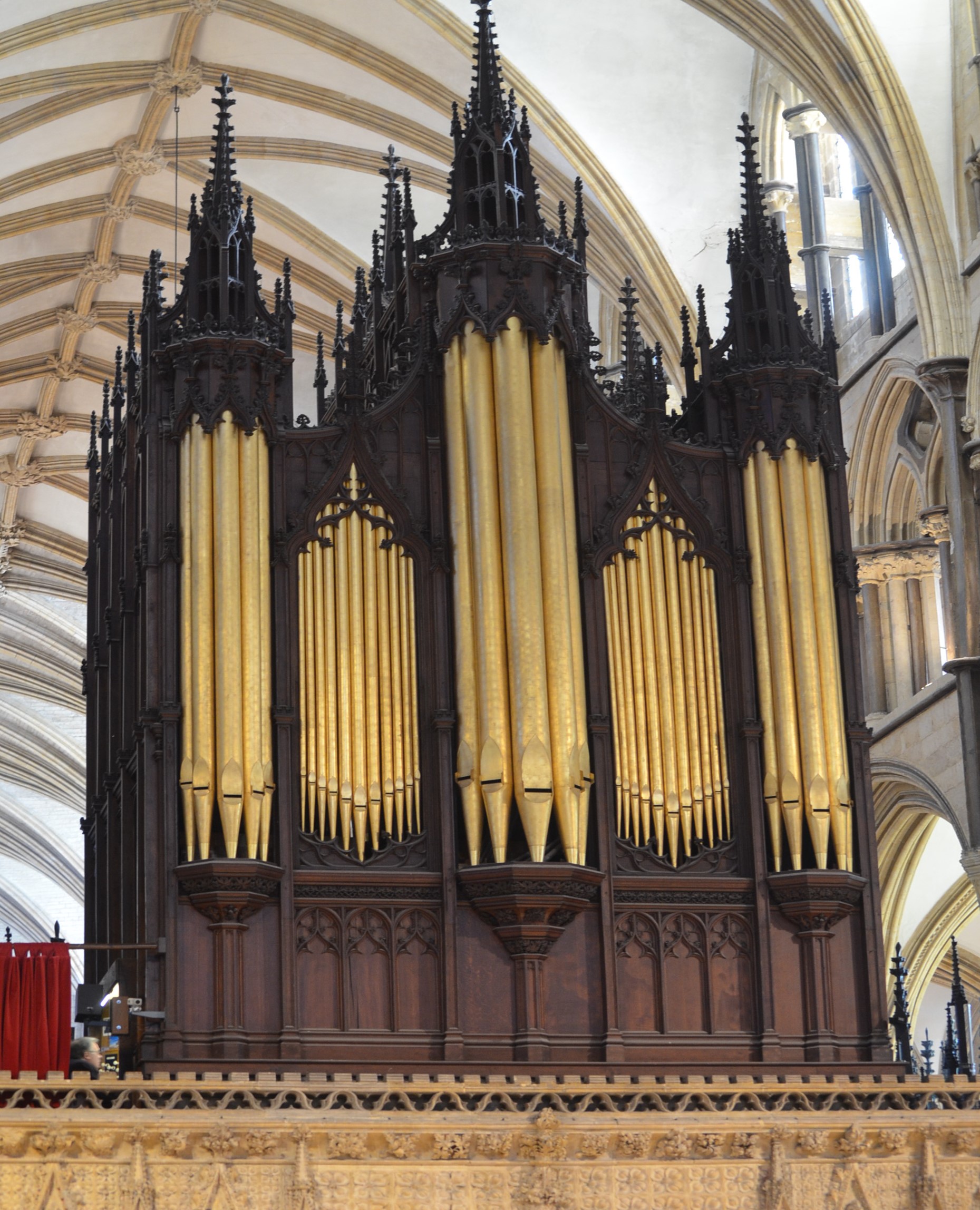
The organ case in Lincoln Cathedral
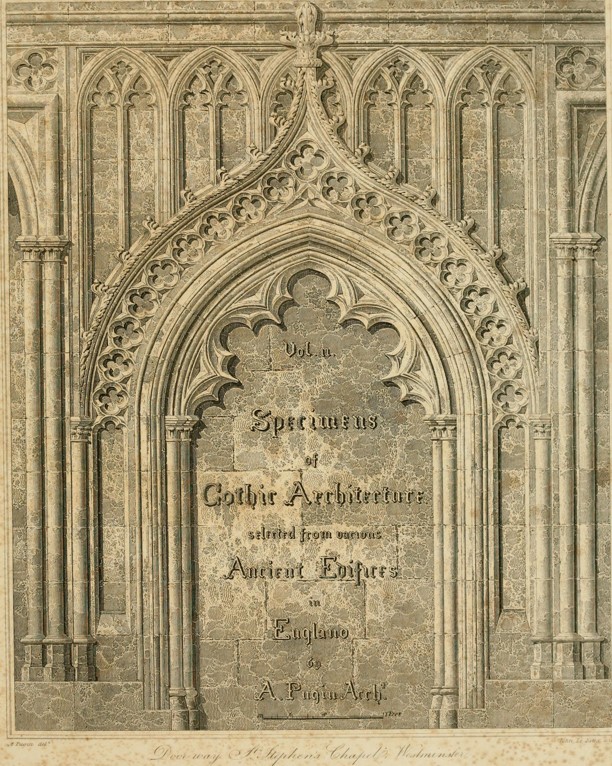
Specimens of Gothic Architecture Vol. II
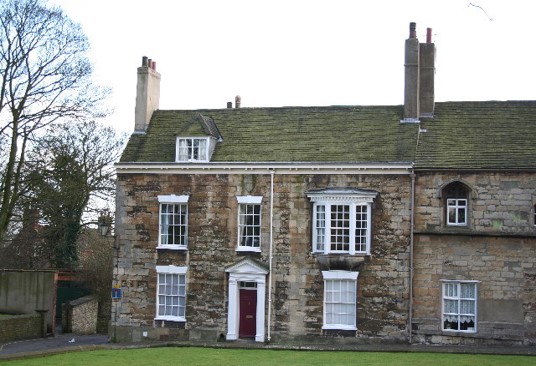
Willson’s Cottages on Newport in Lincoln
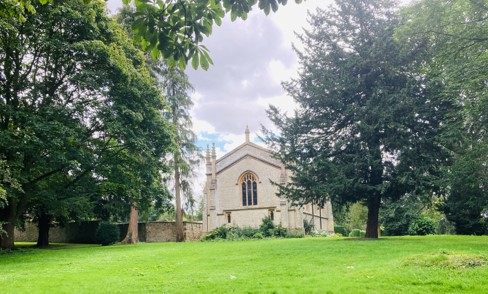
The Catholic Chapel, Hainton Hall
If you require any further information please contact the office.
Phone
VISIT

Preserve | Develop | Protect
Address
St Mary’s Guildhall
385 High Street, Lincoln
LN5 7SF
Lincoln Civic Trust Ltd is a company registered in England and Wales with company number: 527492 and registered address: St.Marys Guildhall, 385 High Street, Lincoln, LN5 7SF.
Registered Charity Number: 249420